


















































 |
Differential Pressure |
|
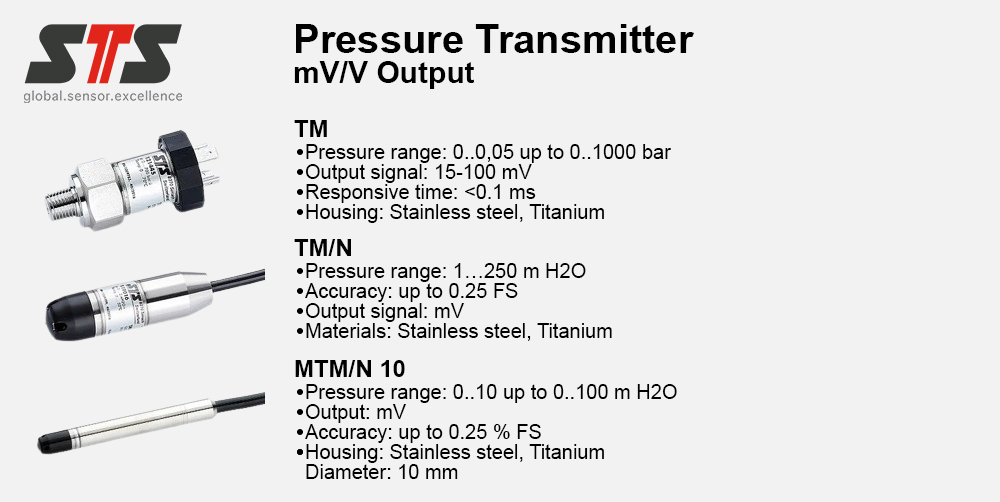
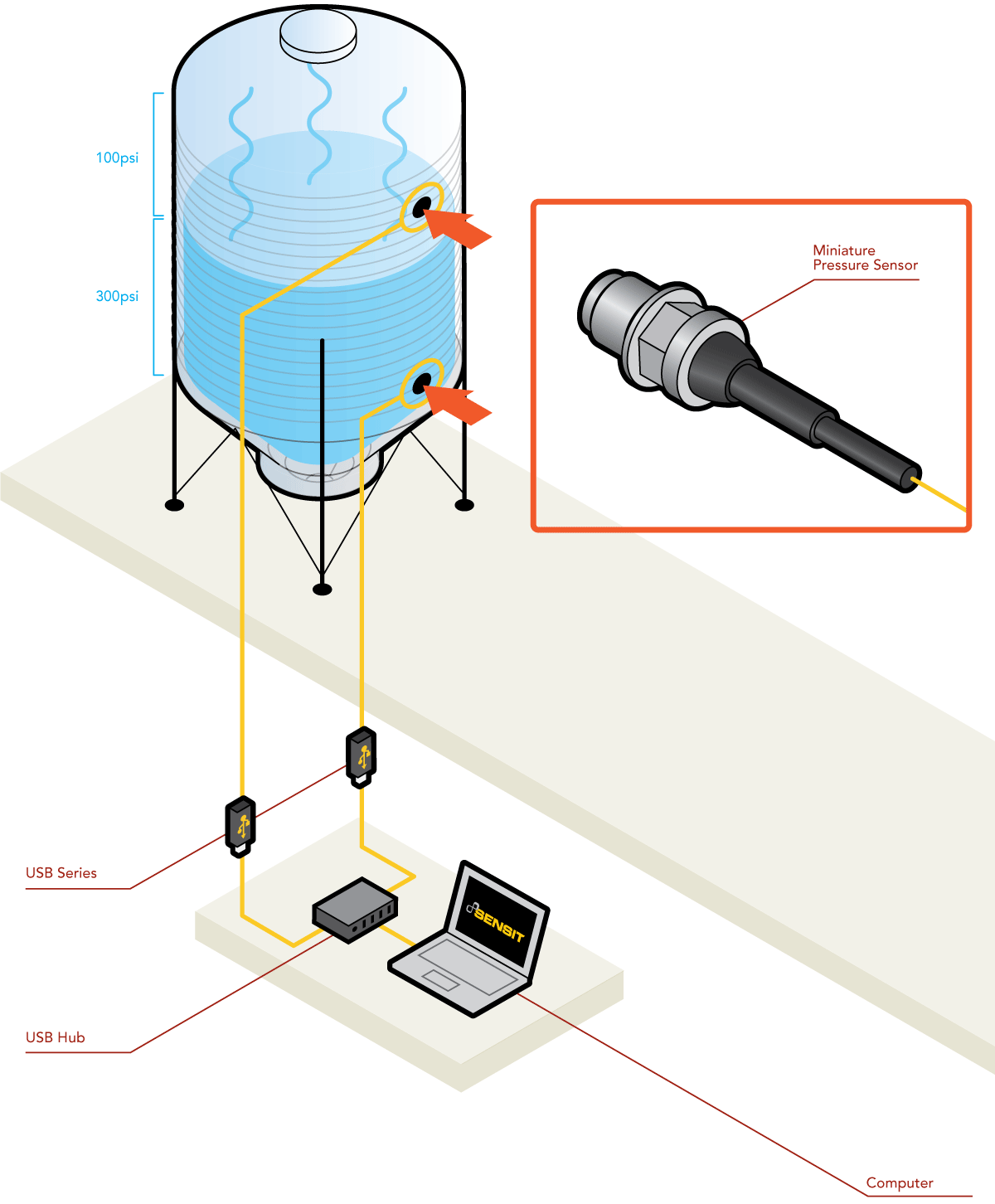
In some industrial applications, instead of one single pressure transducer receiving pressure measurement from two different ports and comparing it, two separate relative pressure sensors can be utilized instead. This may be the case when two different types of sensors are required due to medium constraints (difference in liquid corrosion index requires different sensor body), or even medium differences (gas vs. liquid). Using two differential pressure sensors and a control system to perform signal subtraction, allows process engineers to measure not only the differential pressure but also level, flow, interface, and even density. This article's goal is not to cover all these possibilities in detail, but rather to give an overview of the gamut of secondary applications when using differential pressure sensors independently. The pressure measurement at the bottom of the vessel measures the total pressure exerted by the fluid and the gas above it, while the pressure sensor at the top is only measuring for the static pressure exerted by the gases alone. This arrangement allows the gas pressure to be subtracted from the total measurement at the bottom, leaving the pressure generated by the liquid and allowing process engineers to determine the level of the tank, the flow (level rate of change) or indirectly the density of the liquid. h = (P2 – P1)/ (ρ * g) h = height of the liquid column [m] |
 |
|
How It Works
|
|
Products in Use
|
 PFT 510
Flush Mount Diaphragm Miniature Pressure Sensor |